
Transurethral Resection of Prostate (TURP)
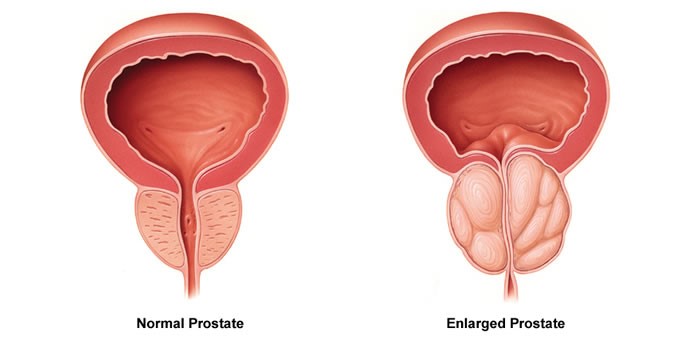
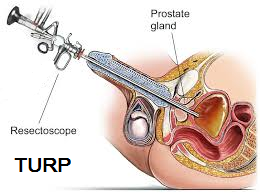
Transurethral resection of the prostate (TURP) is surgery to remove obstructive benign prostate enlargement (BPH). This is indicated for men who fail medication or present with acute retention of urine. As this can potentially be a very bloody operation, any blood-thinning medication, such as aspirin or Plavix must be stopped 1 week beforehand.
How it is done
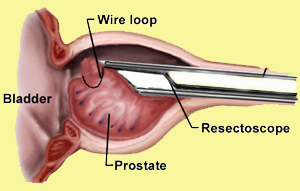
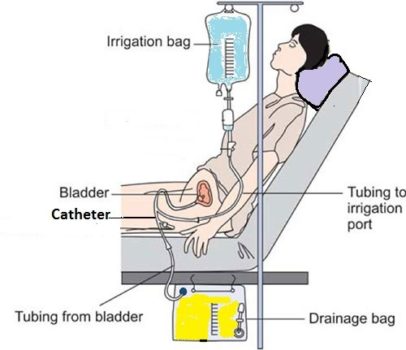
Under general or spinal anaesthesia, a resectoscope is inserted. Occasionally, the urethra is too tight and will have to be dilated to accommodate the resectoscope. The loop instrument is used to cut away the BPH to re-create a channel. A catheter is inserted into the bladder for continuous irrigation fluid to prevent blood clots from blocking the bladder. The operation takes 1 hour. Hospital stay is 3 to 4 days depending on the bleeding.
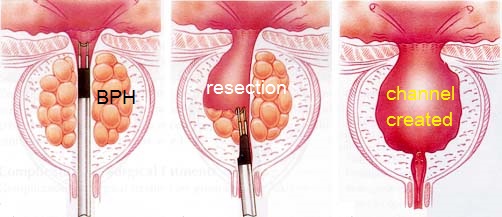
TURP process
Watch how TURP is done
The prostate chips that are evacuated are sent for histology to check if there is any incidental cancer.
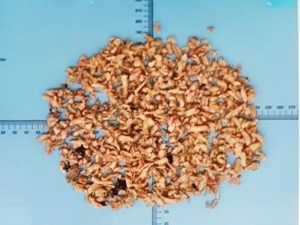
Prostate chips weighing 68 gm removed at TURP
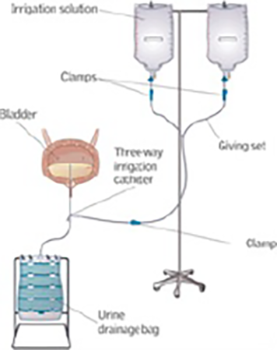
Continuous bladder irrigation after TURP
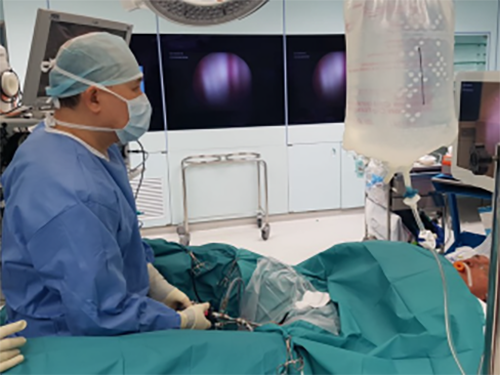
Dr Chin doing TURP surgery
Post-TURP, some men may still experience urgency to pass urine. This is common as it takes time for the bladder to adjust. Most cases will settle by 1 to 3 months. If the overactive bladder persists, medication can be given to suppress the urge feeling.
Complications include:
- bloody urine. This can last 2 to 3 weeks. Many patients may also experience frequent urination, urgency but this usually subsides by 1 to 3 months
- dry ejaculation. This is inevitable because the bladder neck is cut open during TURP and the semen goes into the bladder during ejaculation. The semen will pass out together with the urine and is not harmful while it is in the bladder
- re-bleeding (secondary haemorrhage). This happens in 3% of patients and occurs between the 7th to 10th day after TURP. It is due to urine infection or re-opening of a blood vessel. If the bleeding is heavy, clot retention can occur. A catheter needs to be re-inserted to evacuate the blood clots. Rarely, the patient may need to be brought back to the operating theatre to seal the bleeding vessels
- This can still occur despite antibiotics because the prostate may harbour bacteria which are released during the resection. The bacteria infects the bladder and can even travel down to the testis to cause a painful scrotal swelling
Desired outcomes:
- no blood transfusion ( < 1% rate )
- low UTI rate ( < 5% occurrence )
- no re-admission for secondary bleeding ( < 3% rate )
- no stress incontinence ( < 1% risk )